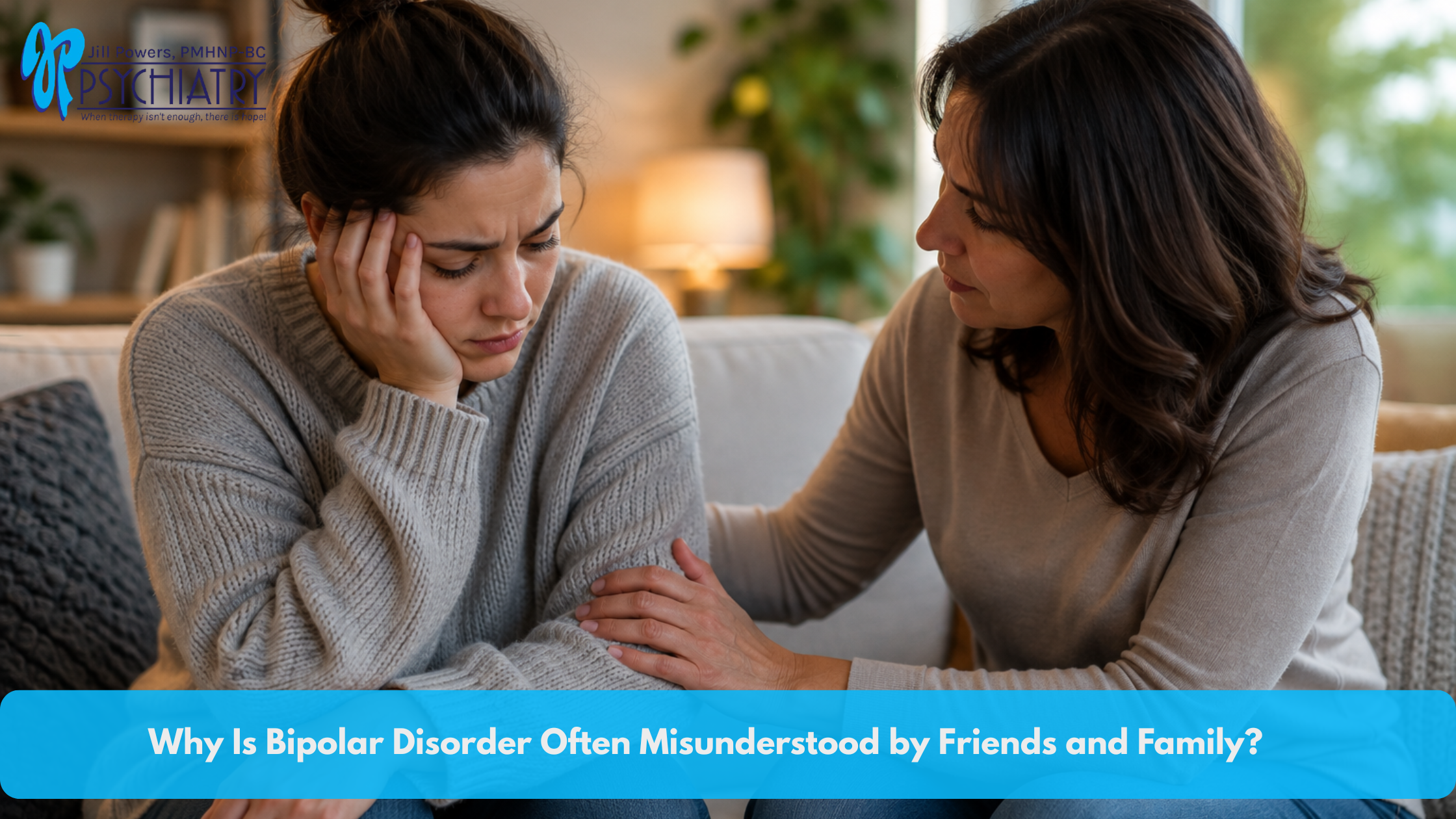



A person with bipolar disorder may seem energetic and confident at one point, then withdrawn or exhausted at another. To friends and family, these changes can be confusing and may be mistaken for moodiness, irresponsibility, or personality changes.
Many bipolar disorder misconceptions come from not understanding how mood episodes actually work. Learning what bipolar disorder involves can help loved ones respond with more awareness and less judgment.
Bipolar disorder is a mental health condition that causes distinct changes in mood, energy, activity, and functioning.
These may include:
The frequency and intensity of episodes vary. Not every emotional reaction or change in mood is a bipolar episode.
Someone may appear completely well between episodes. This can lead loved ones to assume the condition has gone away.
Bipolar disorder is episodic, which means symptoms can change over time. Ongoing care may still be important even during stable periods.
Without understanding bipolar disorder, symptoms can easily be misread.
Increased confidence may appear arrogant. Irritability or rapid speech may seem rude. Withdrawal during depression may look like disinterest. Impulsive decisions may also be judged without recognizing the role of a mood episode.
Understanding the clinical context does not remove responsibility for actions, but it can help families respond more constructively.
Bipolar disorder is often portrayed as rapid shifts between happiness and sadness.
In reality, bipolar episodes involve broader changes in sleep, energy, activity, thinking, behavior, and functioning. Relying on qualified mental health information can help families avoid stereotypes.
Some family members minimize symptoms because they feel unsure about what to say. Others become overly controlling because they are worried.
Both responses can create distance. Asking what type of support is actually helpful is often more productive.
Fact: Ordinary mood changes are part of life. Bipolar episodes are more substantial and can affect sleep, energy, judgment, behavior, concentration, and daily functioning.
Fact: This stereotype contributes to bipolar disorder stigma.
People with bipolar disorder have different personalities, experiences, and support needs. A diagnosis should not be used to make assumptions about someone's character or behavior.
Fact: Mania may involve increased energy, but it can also include agitation, little need for sleep, racing thoughts, irritability, impulsivity, or impaired judgment.
An episode may initially feel energizing while still disrupting everyday life.
Fact: Treatment is intended to support stability and functioning, not change who someone is.
Medication plans are individualized and may require monitoring or adjustment by a psychiatric professional.
Fact: Bipolar disorder is not managed through willpower alone.
Professional care, consistent treatment, regular sleep routines, awareness of symptoms, and ongoing support can all play important roles.
Understanding how bipolar disorder affects relationships can help loved ones separate symptoms from assumptions.
During an episode, someone may speak rapidly, become more irritable, communicate less, or have difficulty concentrating. Loved ones may take these changes personally.
Mood episodes can affect work, household tasks, finances, parenting, or social plans.
Discussing responsibilities during stable periods can make it easier to manage changes later.
Some episodes may lead to actions that affect relationships. Understanding the condition does not erase the impact of those actions.
Accountability, treatment participation, respectful communication, and clear boundaries can help rebuild trust.
Loved ones may experience uncertainty, frustration, or emotional stress.
Education and appropriate support can help family members understand the condition without feeling responsible for managing everything alone.
Understand common symptoms and become familiar with the person's individual warning signs.
Avoid assuming that every emotional change means an episode is starting.
Simple questions can make support more collaborative:
Support should not become monitoring or control.
Avoid comments such as “Just calm down,” “Everyone feels that way,” or “You seem fine.”
Listening first can help the person feel heard and reduce unnecessary conflict.
Support attendance at psychiatric appointments and adherence to an established treatment plan.
Medication should only be started, stopped, or changed under the guidance of the prescribing professional.
Discuss:
Planning in advance can reduce uncertainty if symptoms change.
Bipolar disorder stigma develops when a diagnosis leads to negative labels, assumptions, jokes, blame, or exclusion.
Comments that reduce someone to their diagnosis can make it harder to talk openly about symptoms or seek care.
Respectful language matters. Bipolar disorder is one part of a person's health history, not their entire identity.
A psychiatric evaluation may be appropriate when there are significant changes in mood, sleep, energy, activity, judgment, or daily functioning.
Professional support may also help when mood changes are contributing to relationship conflict, affecting school or work, or raising questions about an existing diagnosis or medication plan.
Many common myths about bipolar disorder come from limited information and inaccurate stereotypes. Better understanding can help families communicate more effectively while recognizing when professional support may be useful.
JP Psychiatry provides psychiatric evaluations and personalized mental health care for children, adolescents, and adults.Request an appointment to discuss your concerns and appropriate next steps.
No. Bipolar disorder involves distinct mood episodes that can affect sleep, energy, activity, thinking, judgment, and functioning.
Yes. Some people experience long periods of relatively stable mood between episodes. Ongoing care may still be important.
Learn about the condition, listen without judgment, ask what support is helpful, encourage consistent care, and discuss a support plan during stable periods.
Yes. Mood episodes can affect communication, responsibilities, finances, and trust. Open communication, healthy boundaries, and appropriate treatment can help couples manage these challenges.