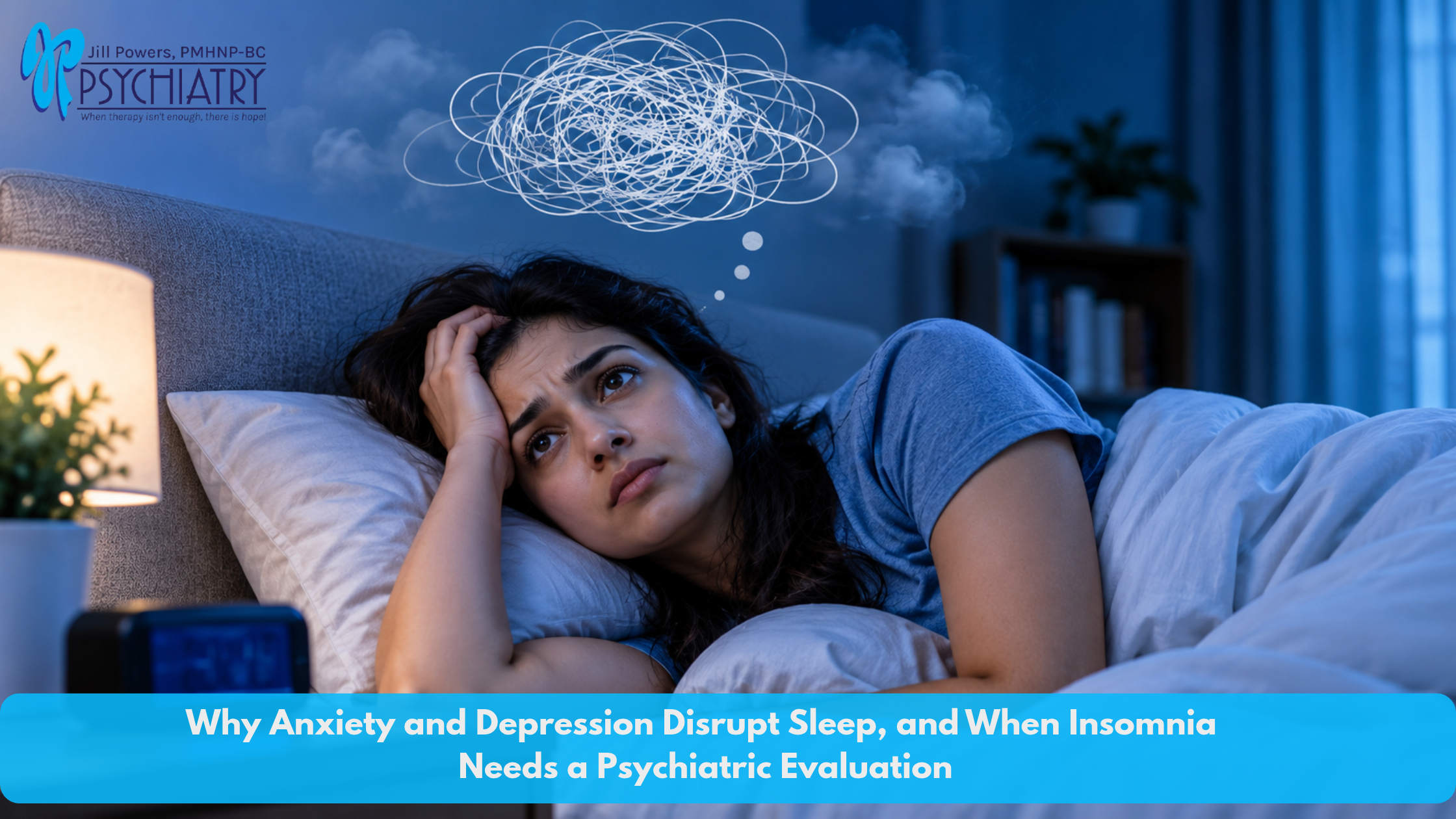



It is 2 a.m. and you are replaying a conversation from this afternoon, running through tomorrow's to-do list, and checking the clock again. You are exhausted, yet your mind will not switch off.
If you can't sleep because of anxiety, you are far from alone. Anxiety can keep the brain and body in a heightened state that makes it hard to fall or stay asleep. Depression can bring insomnia, early waking, oversleeping, or sleep that never feels restful. Poor sleep then worsens mood, concentration, and emotional regulation, and the cycle continues.
Anxiety affects sleep through both thoughts and body sensations. Together, they can make bedtime feel like the busiest part of the day.
When the day quiets down, worries often get louder. People describe replaying conversations, anticipating problems, and worrying about work, health, finances, or family. Mentally switching off feels nearly impossible.
The body can stay on alert too. Muscle tension, restlessness, and a feeling of being on edge are common, along with increased awareness of heartbeat or breathing.
Worry about sleep itself can become its own problem. Many people begin dreading bedtime, which sets the stage for a difficult night before it starts:
Depression and sleep problems often travel together, but not always in the same direction.
Some people have trouble falling asleep, wake repeatedly during the night, or wake earlier than intended and cannot fall back asleep.
Others sleep longer than usual, struggle to get out of bed, or sleep during the day.
Fatigue can persist despite adequate time in bed, along with poor concentration and low motivation. Mornings can feel heavy, and the day may start already behind.
This kind of sleep is easy to mistake for simple tiredness, which is one reason depression can go unrecognized for a long time.
Anxiety and depression can interfere with sleep, and poor sleep can worsen irritability, concentration, stress tolerance, and mood. Each can make the other harder to manage.
That is why treating only the sleep complaint may miss an underlying psychiatric condition. When more than one condition occurs at the same time, the full picture matters.
Not every rough night points to a psychiatric condition. A short-term deadline, travel, a disrupted routine, temporary family stress, or a brief period of worry can all disturb sleep.
Temporary sleep problems usually have a clear trigger and a relatively short duration. Functioning remains manageable, and sleep improves as the stressor resolves.
When sleep keeps struggling after the trigger has passed, or no trigger can be named at all, a closer look is reasonable.
Consider an evaluation when sleep problems occur alongside:
A psychiatric evaluation looks at sleep as part of the whole picture, not as an isolated complaint. A provider may review:
Treatment generally focuses on the underlying mental health condition. Plans are individualized and vary with symptoms, history, and age, so no single approach fits everyone. Depending on the person, that may include psychotherapy when indicated, medication management when appropriate, sleep routine and behavioral changes, and follow-up to see how symptoms respond.
Some situations should not wait for a routine appointment:
Call or text 988, the Suicide & Crisis Lifeline, for thoughts of self-harm. In an emergency, call 911.
A few notes can make an evaluation more useful. Over one to two weeks, jot down:
Persistent insomnia may be connected to anxiety, depression, or another condition that needs evaluation. JP Psychiatry provides psychiatric evaluations and medication management for adults, adolescents, and children over age 6, with in-person visits in Chicago and telepsychiatry across Illinois.
Request an appointment to talk through what your sleep has been like.
Anxiety keeps the mind and body alert through racing thoughts and physical tension, which makes it difficult to fall or stay asleep.
Yes. Depression can cause trouble falling asleep, frequent waking, and waking earlier than intended.
Yes. Some people sleep longer, struggle to get up, or sleep during the day yet still feel unrefreshed.
Consider an evaluation when sleep problems persist alongside worry, sadness, fatigue, or declining functioning.
Often, yes, since addressing the underlying condition may ease sleep problems, though response varies by person.