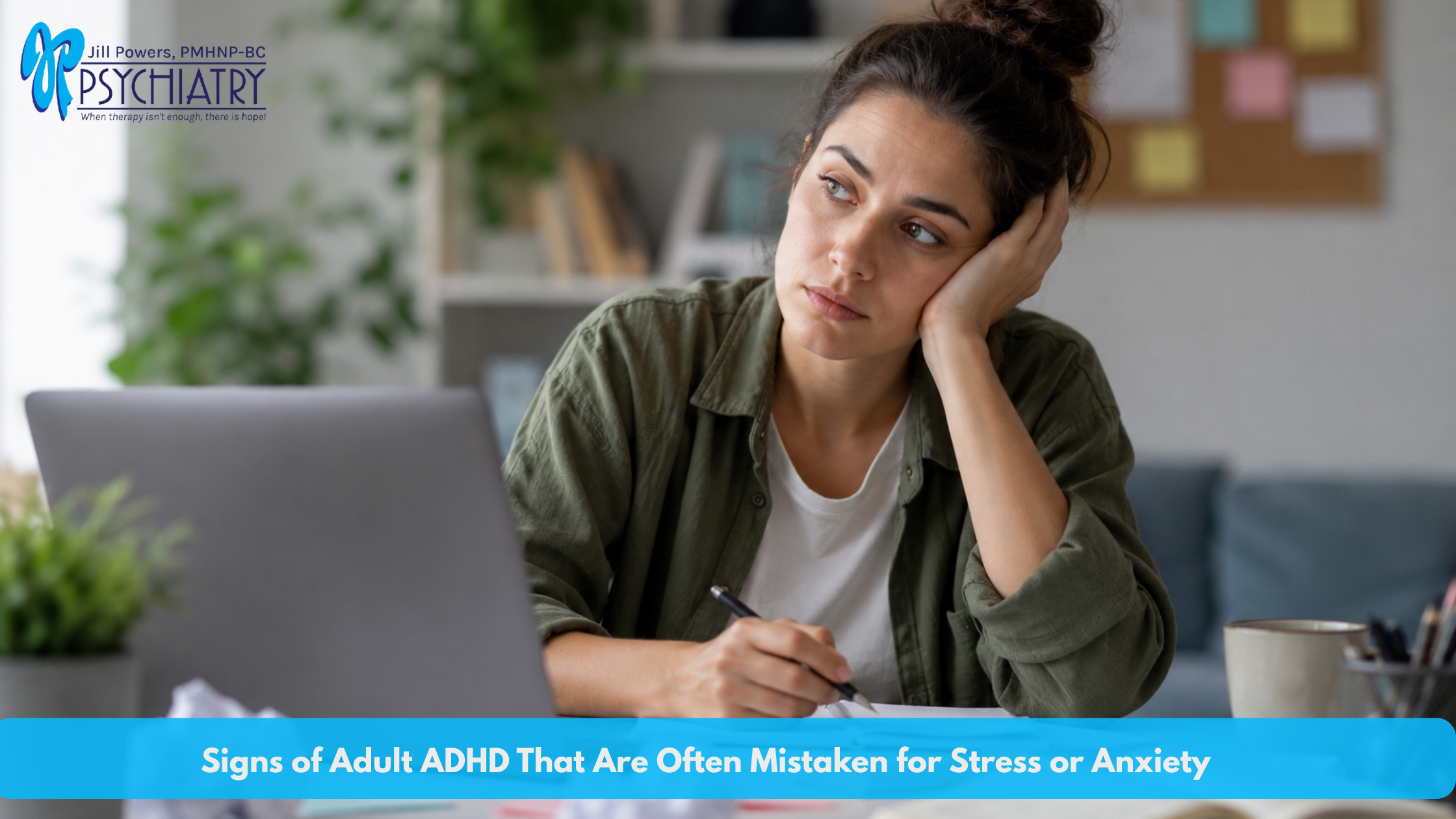



Do you constantly feel overwhelmed by everyday responsibilities, struggle to stay focused during conversations, or find yourself rushing to complete tasks at the last minute? If so, you may assume stress or anxiety is to blame. After all, these challenges are common in today's fast-paced world.
However, for some adults, these experiences may be signs of something else entirely: Attention-Deficit/Hyperactivity Disorder (ADHD). While ADHD is often thought of as a childhood condition, many people continue to experience symptoms well into adulthood, sometimes without realizing it.
Because adult ADHD and anxiety share many overlapping symptoms, it is not uncommon for ADHD to go undiagnosed for years.
Learning to recognize the differences can be the first step toward understanding your symptoms and finding effective treatment.
One of the biggest reasons adult ADHD goes undiagnosed is the widespread belief that ADHD is a childhood condition. While symptoms often begin during childhood, ADHD frequently continues into adolescence and adulthood.
As people mature, symptoms may become less obvious. Hyperactivity may evolve into feelings of internal restlessness, while attention difficulties can appear as chronic disorganization, forgetfulness, or struggles with productivity.
Because adult symptoms often look different from childhood symptoms, many individuals never realize ADHD may be the underlying cause of their challenges.
Many adults with ADHD develop coping strategies that help them function despite ongoing difficulties.
They may rely heavily on calendars, reminders, alarms, planners, and detailed to-do lists. Some become perfectionistic or work significantly harder than others to compensate for attention and organization challenges.
While these strategies can be effective, they often require substantial mental effort and may leave individuals feeling exhausted or overwhelmed. Over time, the constant need to compensate can contribute to stress and anxiety.
ADHD and anxiety share several symptoms, including restlessness, difficulty concentrating, sleep problems, and irritability.
Someone with ADHD may struggle to focus because their attention constantly shifts between tasks. Someone with anxiety may struggle to focus because they are preoccupied with worries and anxious thoughts.
Because the symptoms can appear similar, it is important to identify the underlying cause. Understanding whether ADHD, anxiety, or both are present can help guide more effective treatment.
Many adults with ADHD describe feeling mentally overwhelmed by everyday responsibilities.
Managing schedules, appointments, work tasks, household obligations, and personal commitments may feel unusually difficult. Rather than simply feeling busy, they often struggle to organize thoughts, prioritize tasks, and decide where to begin.
This persistent mental clutter can resemble chronic stress.
Everyone procrastinates occasionally, but adults with ADHD often experience ongoing difficulty starting tasks, even when they genuinely want to complete them.
They may understand the importance of a project, intend to begin early, and still find themselves unable to get started until the last minute.
This pattern is often misunderstood as laziness, poor motivation, or avoidance when it may actually be related to ADHD-related executive functioning difficulties.
Adults with ADHD may unintentionally lose focus during conversations.
They might zone out, miss important details, forget information that was just discussed, or struggle to follow lengthy explanations.
These attention lapses can affect workplace communication, friendships, and relationships, often leading to frustration or misunderstandings.
Forgetfulness is another common sign of adult ADHD.
Examples may include:
While occasional forgetfulness is normal, persistent patterns can interfere with daily functioning and create significant stress.
Not all adults with ADHD appear physically hyperactive.
Instead, many experience an internal sense of restlessness. They may feel constantly driven to stay busy, seek stimulation, multitask, or switch between activities.
This ongoing feeling of being "on edge" can sometimes resemble anxiety.
Time management difficulties are among the most common signs of adult ADHD.
Individuals may:
These challenges can negatively impact work performance, relationships, and self-confidence.
Many adults with ADHD have no trouble generating ideas or starting projects.
The challenge often comes later.
They may begin multiple tasks enthusiastically but struggle to sustain focus long enough to finish them. This can lead to unfinished projects, incomplete responsibilities, and feelings of frustration.
ADHD affects more than attention.
Many adults experience heightened emotional responses, including frustration, impatience, irritability, or difficulty recovering from minor setbacks.
These emotional reactions may be mistaken for anxiety or mood-related concerns when they are actually connected to ADHD.
Some adults with ADHD notice they perform best when deadlines are imminent.
They may struggle to focus for days or weeks, only to become intensely productive once urgency creates enough stimulation to capture their attention.
Although this pattern can produce results, it often creates chronic stress and emotional exhaustion.
Understanding the differences between ADHD and anxiety can help clarify what may be contributing to your symptoms.
Both conditions can involve:
Because of these similarities, distinguishing between the two can be difficult without a professional assessment.
Certain symptoms are more strongly associated with ADHD, including:
These patterns often begin during childhood, even if they were never formally recognized.
Symptoms that may suggest anxiety include:
In anxiety disorders, concentration difficulties are often caused by intrusive worries rather than attention regulation challenges.
Yes. ADHD and anxiety commonly occur together.
In fact, living with untreated ADHD can contribute to anxiety. Constantly struggling with deadlines, organization, and daily responsibilities may create ongoing stress that eventually develops into significant anxiety symptoms.
Because both conditions can coexist, a thorough professional assessment is essential for accurate diagnosis and treatment planning.
If you're wondering, "Do I have adult ADHD?" consider the following questions:
Answering "yes" to several of these questions does not mean you have ADHD. However, it may indicate that a professional evaluation could be beneficial.
An adult ADHD evaluation is designed to provide a comprehensive understanding of your symptoms and experiences.
A mental health professional will discuss your current challenges and how they affect different areas of your life.
This may include difficulties related to work, education, relationships, daily responsibilities, and overall functioning.
Because ADHD symptoms typically begin in childhood, your provider may explore your developmental history.
Topics may include:
This information helps establish whether symptoms have been present over time.
A thorough evaluation often includes screening for conditions that may share symptoms with ADHD, such as:
Identifying co-occurring conditions helps ensure an accurate diagnosis.
If ADHD is diagnosed, treatment recommendations will be tailored to your specific needs.
Depending on your situation, treatment may include:
The goal is to improve daily functioning and overall quality of life.
It may be time to seek professional support if:
Seeking help can provide clarity, validation, and access to effective treatment options.
Sometimes, ongoing struggles with focus, organization, or time management aren't simply the result of stress or a busy schedule. Adult ADHD can often go unnoticed for years, leaving people wondering why everyday tasks feel more difficult than they should.
Recognizing the signs is the first step toward understanding what's really going on and getting the support you need to feel more in control of your daily life.
Many adults live with undiagnosed ADHD for years, believing their symptoms are simply part of a stressful life. At JP Psychiatry, we help uncover the root cause of these challenges and create treatment plans tailored to your unique needs.
Book an appointment today and take the next step toward greater focus, confidence, and control.
Yes. ADHD and anxiety share symptoms like restlessness, poor concentration, and irritability, making them easy to confuse.
Common signs include procrastination, forgetfulness, disorganization, poor time management, difficulty focusing, and unfinished tasks.
Stress-related symptoms are often temporary, while ADHD symptoms tend to be long-standing and affect multiple areas of life.
An evaluation typically includes a review of symptoms, personal history, daily functioning, and screening for related mental health conditions.
ADHD begins in childhood, but many people are not diagnosed until adulthood when symptoms become more noticeable.