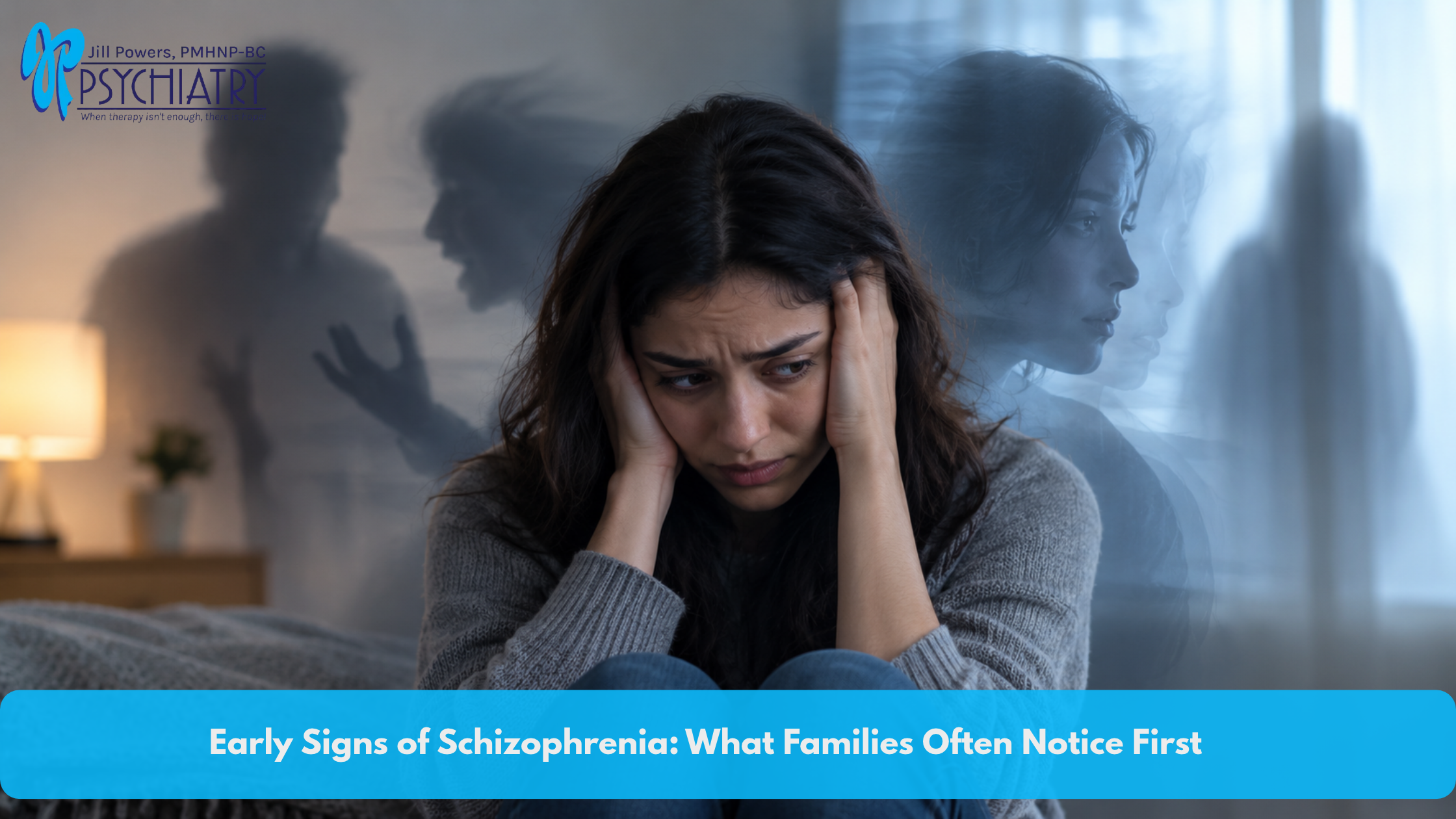



A son who used to text all day has stopped answering. A daughter who once kept every assignment organized now stares at a blank screen for hours. Nothing dramatic has happened, yet something feels different.
Early schizophrenia often begins this way, with gradual changes in thinking, behavior, emotions, and daily functioning that appear before more obvious psychotic symptoms. One behavior alone does not mean someone has schizophrenia.
Families often notice the pattern first. The person living it may not recognize it, because the changes arrive slowly and can feel normal from the inside.
Early signs are usually subtle and tend to appear in several areas of life at once. These are the changes families describe most often.
A person may spend far more time alone, pull away from friends and relatives, and lose interest in activities they once enjoyed. Conversations get shorter, and invitations go unanswered more often than before.
Families often describe it as the person slowly "fading out" of shared routines, such as meals, calls, or weekend plans, without any clear argument or reason.
Concentration slips, familiar tasks take longer, and attendance or output declines. Motivation and organization may fade, even in someone who was previously dependable.
Thoughts may be harder to organize, so speech becomes difficult to follow or the person loses track mid-conversation. Ordinary situations may start to feel suspicious or carry unusual meaning.
Someone may seem emotionally distant, with less facial expression or a flatter tone of voice. Interest and enthusiasm may fade, or emotional reactions may not match the situation.
A joke that once got a laugh may now get no response, or a minor frustration may trigger a reaction that seems far out of proportion.
Personal hygiene may decline, sleep routines may shift significantly, and responsibilities may be neglected. Holding onto a normal daily structure becomes harder.
Over time, some people develop psychosis, which means losing a firm grip on what is real. This can include hallucinations, such as hearing or seeing things others do not, and delusions, which are fixed beliefs that do not match reality.
Disorganized thinking or speech and significant difficulty telling what is real from what is not are also signs. A person may become convinced that others are watching them, or may speak in ways that jump between unrelated ideas.
When these appear, a prompt psychiatric evaluation matters. They are no longer subtle changes that can be watched for a few more weeks.
Stress can also cause withdrawal, poor sleep, and slipping performance. The difference usually comes down to pattern, duration, and whether the person stays grounded in reality.
Changes more common with stress:
Changes that deserve psychiatric evaluation:
An early assessment helps identify what is causing the symptoms. Other mental health conditions, substance-related effects, sleep problems, or medical factors can look similar, which is why overlapping mental health symptoms are best sorted out by a professional.
Earlier treatment after a first episode of psychosis is also associated with better recovery opportunities. Waiting for symptoms to become unmistakable can mean waiting longer for support that may help.
An evaluation is also not a label. It is a structured conversation about symptoms, history, and daily life, and it can bring clarity to a family that has spent months guessing.
Families do not need to be certain of anything before taking a first step. A calm, steady approach tends to work best. Observations written down in advance also give a provider something concrete to work with:
Reach out when personality or behavior changes persist, daily functioning drops significantly, or confusion and disorganization increase. Hallucinations, strong unusual beliefs, and any safety concerns call for help right away.
If someone is in immediate danger or has lost contact with reality, call 911. For thoughts of self-harm, call or text 988, the Suicide & Crisis Lifeline.
Early changes deserve evaluation, not a guess. JP Psychiatry provides psychiatric evaluations and schizophrenia care, including medication management, with in-person visits in Chicago and telepsychiatry across Illinois.
Request an appointment if you would like help making sense of what your family has been noticing.
Social withdrawal, trouble concentrating, declining school or work performance, and subtle changes in thinking or emotion often come first, before hallucinations or delusions.
Symptoms most often begin between the late teen years and early thirties, though they can start earlier or later.
Stress can cause withdrawal, poor sleep, and reduced focus. Stress-related changes usually link to an event and stay temporary, with the person remaining grounded in reality.
No. Withdrawal also occurs with depression, anxiety, and stress. It becomes more concerning alongside other changes in thinking, emotion, or functioning.
Seek help when changes persist or progress, or when functioning, safety, or contact with reality is affected.