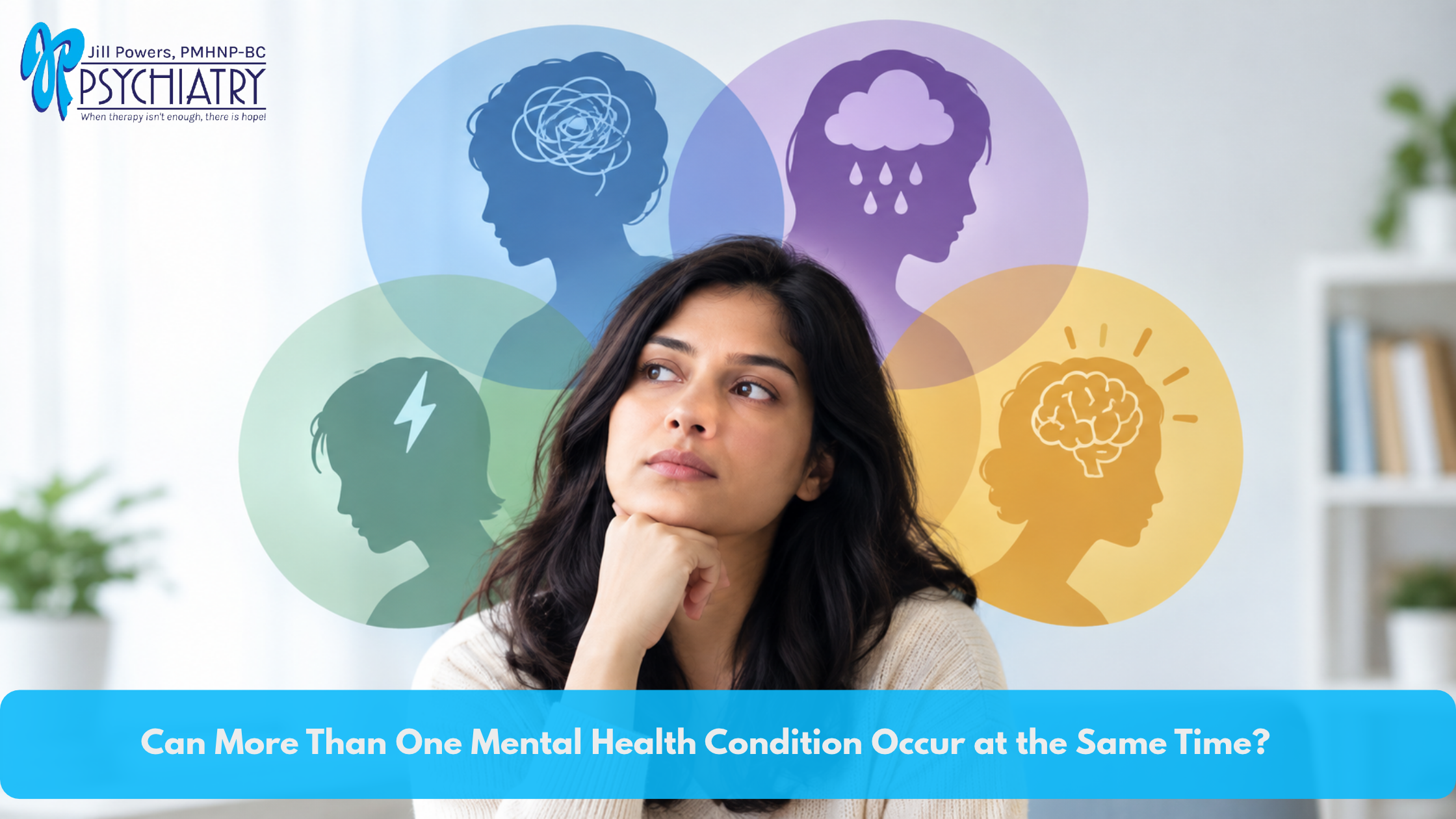



You've been managing constant worry for months, and now a low, heavy sadness seems to have settled in alongside it. You start to wonder whether these are two separate struggles or just different faces of the same one. The direct answer: yes, anxiety and depression can occur at the same time. Clinicians call this comorbidity, or co-occurring conditions, and it's more common than many people realize. Recognizing when symptoms overlap matters, because an accurate diagnosis is what makes an effective treatment plan possible.
Anxiety and depression are classified as distinct conditions, but they affect closely related areas of emotional and physical functioning, which is part of why they so often appear together rather than in isolation.
Several factors appear to contribute to that overlap. Genetics and family history play a role, as does brain chemistry and how the body's stress-response systems function. Chronic or significant stress and trauma can also increase the likelihood that both conditions take hold.
Ongoing sleep disruption and certain medical or lifestyle factors add to that risk as well, since the body and mind rely on rest and stability to regulate mood and manage stress.
The two conditions can also feed each other. Prolonged anxiety may lead to emotional exhaustion or a persistently low mood, while depression often increases worry about daily functioning, relationships, or the future, which can make the anxiety more pronounced in return. Research suggests nearly half of people diagnosed with one condition also meet the criteria for the other, which is part of why clinicians are trained to screen for both rather than treating whichever symptom is most visible.
Because the two conditions can occur together, it helps to know what each may feel like on its own, and where they start to blend.
Symptoms alone can't confirm a diagnosis, because several mental health conditions can present in similar ways. If you're unsure whether what you're experiencing rises to the level of a clinical concern, reviewing warning signs that may call for professional attention can help clarify next steps. A comprehensive evaluation is what actually distinguishes one condition from another.
Anxiety and depression are the most commonly discussed pair, but they aren't the only conditions that can occur together. Co-occurring patterns may also involve ADHD, OCD, PTSD, or bipolar disorder, in various combinations with each other.
This is exactly why a comprehensive psychiatric evaluation matters when symptoms overlap. Two conditions can share several of the same signs, and treating only the most visible one often leaves the other unaddressed, which can slow progress or let symptoms persist longer than necessary.
A psychiatric evaluation is designed to look at the full picture rather than a single symptom in isolation. That typically means reviewing:
The goal is to understand the full pattern of symptoms, not to assign a diagnosis based on one isolated concern.
When both conditions are present, treatment is planned around the full picture rather than addressing each set of symptoms separately without considering how they interact.
Treatment planning often includes a psychiatric evaluation, medication management when appropriate, ongoing symptom monitoring, and lifestyle or behavioral recommendations. In practice, this kind of care often centers on evaluation and medication management, with referrals to therapy professionals made when additional support would help.
The right approach varies by diagnosis, symptom severity, medical history, age, and each person's individual circumstances, which is why treatment plans are never one-size-fits-all.
Anxiety and depression can occur together, and so can other combinations of mental health conditions. What matters most isn't naming every symptom on your own, but understanding the full pattern so treatment addresses what's actually happening. An accurate diagnosis is the foundation every effective plan is built on, and it starts with a conversation about what you've been experiencing.
JP Psychiatry provides comprehensive psychiatric evaluations and medication management for adults, adolescents, and children over age 6, with in-person visits in Chicago and telepsychiatry available across Illinois.
Request an appointment to talk through what you've been experiencing.
Yes. One condition may feel more prominent for a stretch of time before symptoms shift, and it's common for anxiety to feel more intense during certain periods and depression to feel more pronounced during others.
There's no fixed order. For some people, ongoing anxiety gradually leads to low mood and depression, while for others, depression develops first and brings a heightened sense of worry along with it.
Anxiety that goes unaddressed for a long period can contribute to emotional exhaustion, and that exhaustion may eventually develop into depression. Addressing anxiety symptoms early may help reduce this risk.
Yes. Both conditions can affect sleep, appetite, and energy levels over time, and physical symptoms like muscle tension or a rapid heartbeat are common with anxiety in particular.
In some cases, yes. Certain medications are approved to treat both conditions, though the right choice depends on an individual's specific symptoms, medical history, and how the two conditions are presented together.